
Si-gul Dossier · Home
Partner with us

AI-native drug discovery. Built for assets.

Si-gul combines target intelligence, computational chemistry and experimental validation to create de-risked, licensable drug assets for pharma partners.

Protein structure model, ligand bound. Medicine begins as something small enough to hold.

Conventional discovery finds out last.

Targets are chosen on partial evidence. Molecules are designed against them. The answer arrives in the clinic, years and billions later.

Each gate removes candidates. Target selection, molecule design, validation, then the clinic, which removes almost all of them.

Most programs fail late, after most of the money has been spent. The failure was knowable earlier. Nobody asked.

Si-gul moves the judgement to the front.

Targets are scored on genetic, clinical and structural evidence before any chemistry begins. Weak biology is set aside while it is still cheap to set aside.

Generate candidates only against targets that hold. Validate them in the lab. Fewer dead ends reach the clinic, and the ones that reach it are better.

Conventional path 96 of 96 candidates
Targets Design Validation Clinic

Illustrative. The field shows the shape of the argument, not a measured attrition rate.

From biology to a licensable asset.

Four stages, each producing evidence the next one is measured against. The output is not a report. It is a program a partner can take on.

01

Target intelligence

Genetic association, clinical evidence, druggability, safety signal and literature strength scored together for every candidate target in an indication.

Output · a ranked target with an evidence file, not a hunch.
02

Generative chemistry

Candidate molecules designed and optimised against the ranked target, filtered for potency, selectivity and developability before anything is synthesised.

Output · a small, defensible series worth making.

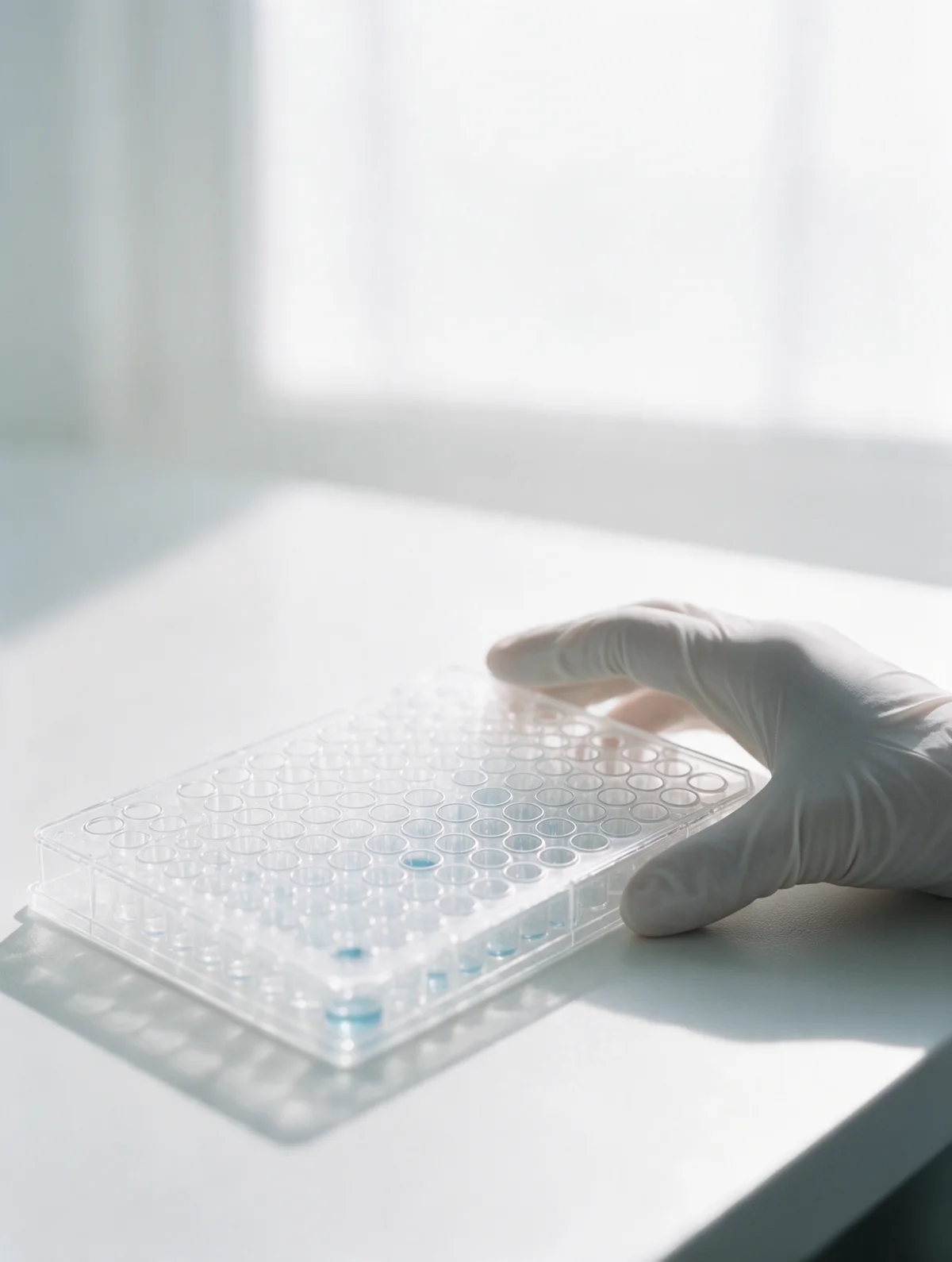
A clear assay microplate on a white bench in soft daylight, a gloved hand resting at its edge.
03

CRO and wet-lab validation

Binding, cellular and early ADME assays run with contract research partners. Every prediction is tested, and every result is fed back into the models.

Output · experimental evidence a partner's own scientists can audit.

04

De-risked pipeline asset

A validated program packaged for partnering: target rationale, chemistry, data package and a development plan, ready for in-licensing or co-development.

Output · an asset pharma can build on.

Each stage is designed to end a program early if it should end. That is where the value is made.

Every experiment makes the next one better.

Most discovery platforms predict once. Si-gul's models are retrained on the results of their own predictions, so the error in the next selection is smaller than the error in the last one.

  1. 01Experimental data from assays, structures and the literature enters the models.
  2. 02AI scoring and model refinement recalibrates target and molecule scores against what was actually observed.
  3. 03Better selection of targets and candidates, with the failure modes of the last round priced in.
  4. 04New experiments designed to be maximally informative, not merely confirmatory.
  5. 05Improved models, and the loop closes on richer data than it opened with.
Experimental data
AI scoring and model refinement
Better target and molecule selection
New experiments
Improved models
Si-gul AI Learning LoopClosed-loop discovery

Fewer dead ends. Better candidates. More valuable assets.

The economics of drug discovery are set by how late failure is discovered. Moving that discovery earlier changes every number below.

0%

Phase I to approval

Roughly one in eight programs that reach first-in-human studies becomes a medicine.

10to0yrs

From target to patient

Long enough that the biology chosen at the start is rarely re-examined before the end.

$0Bto$0B

Estimated cost per approved drug

Including the cost of the programs that failed on the way. Most of that spend is late-stage.

Figures are industry-wide estimates supplied by Si-gul for this page and should carry their published sources at launch.

We don't sell software. We build assets pharma can in-license.

Si-gul identifies promising biology, designs and optimises candidates, generates experimental evidence, and packages validated programs for partnering and licensing. The platform is how we work. The asset is what we hand over.

Target rationale
With the evidence behind every score.
Lead series
Structure, activity and selectivity data.
Validation
Run to a pre-agreed plan a partner's scientists can audit.
Development plan
With a data room built for diligence.
$0B

Cross-border biotech licensing value, 2025

Pharma increasingly buys its pipeline rather than growing all of it. Programs originated outside the traditional hubs, with the evidence to survive diligence, are what that market is looking for.

Boston San Francisco London Basel Tokyo Shanghai India · Si-gul

Origination in India. Partnering wherever the medicine is built.

To be India's engine for licensable, AI-native drug discovery, turning neglected biology into assets pharma can build on.

A great deal of disease biology is under-studied because it was never commercially obvious. Much of it matters most in the places we come from. We think evidence, not geography, should decide what gets built.

Build the next drug asset with us.

If you lead search and evaluation, external innovation or early R&D at a pharma or biotech, we would like to show you what we are building and hear what you need.